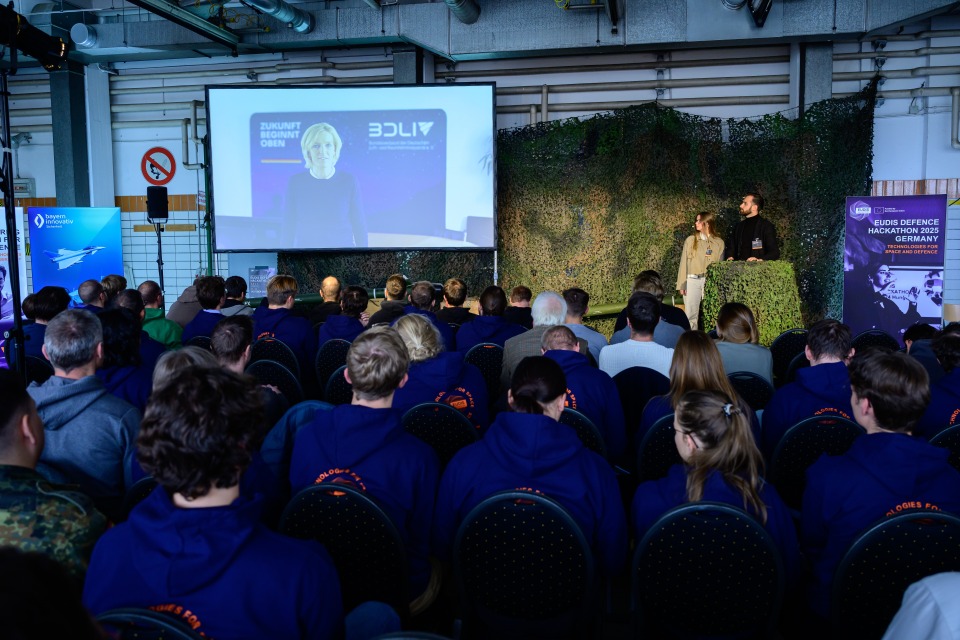

From 26 to 28 March 2026, the EUDIS Defence Hackathon returned across eight locations – the Czech Republic, France, the Netherlands, Norway, Poland, Portugal, Romania and Spain, bringing together some of Europe’s most promising innovators to tackle one of today’s most urgent defence challenges: Defending Airspace.
Over the course of an intensive three-day sprint, Over 580 participants— including startups, teams of engineers and defence innovators — worked side by side to adapt and validate their technologies against real operational needs.
This edition focused on developing solutions that can strengthen Europe’s ability to detect, monitor, and respond to evolving aerial threats.
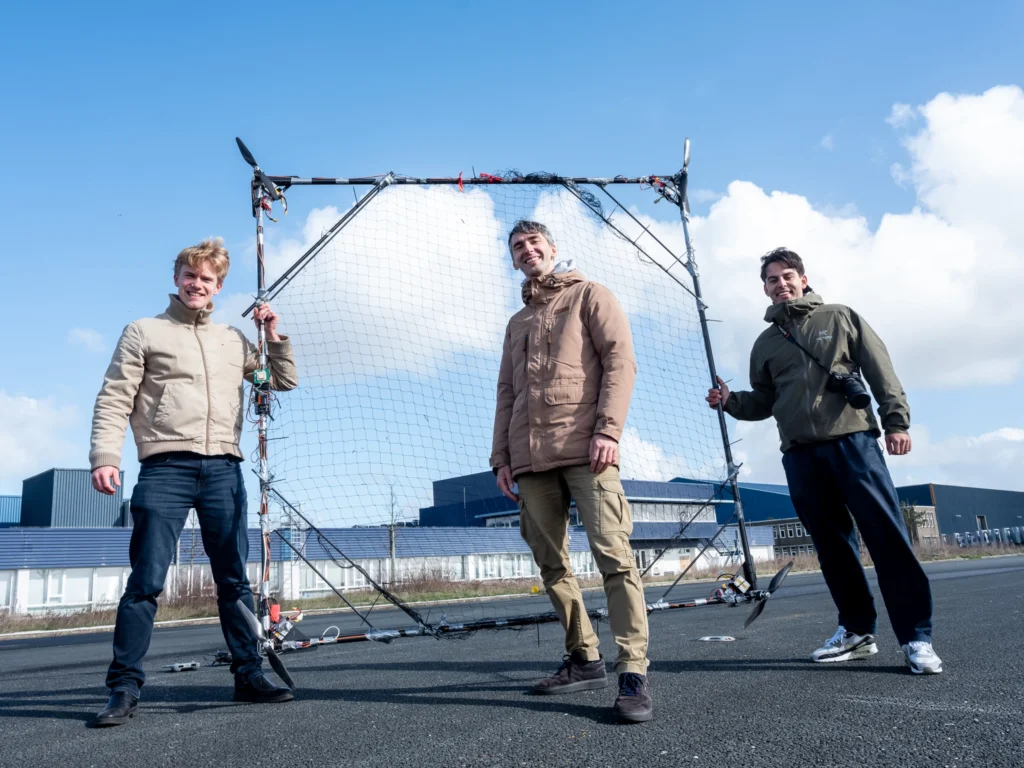
Two core challenges — cost-effective drone interception and next-generation drone detection systems — were defined, addressing shared priorities across Member States. These were complemented by locally defined challenges, reflecting the specific strengths and needs of each national ecosystem, from maritime autonomous systems in Portugal to cognitive warfare in Poland and GNSS-denied navigation in France.
Over the course of the weekend, participants collaborated to design, develop and pitch 169 innovative solutions, addressing concrete defence use cases rather than theoretical concepts.
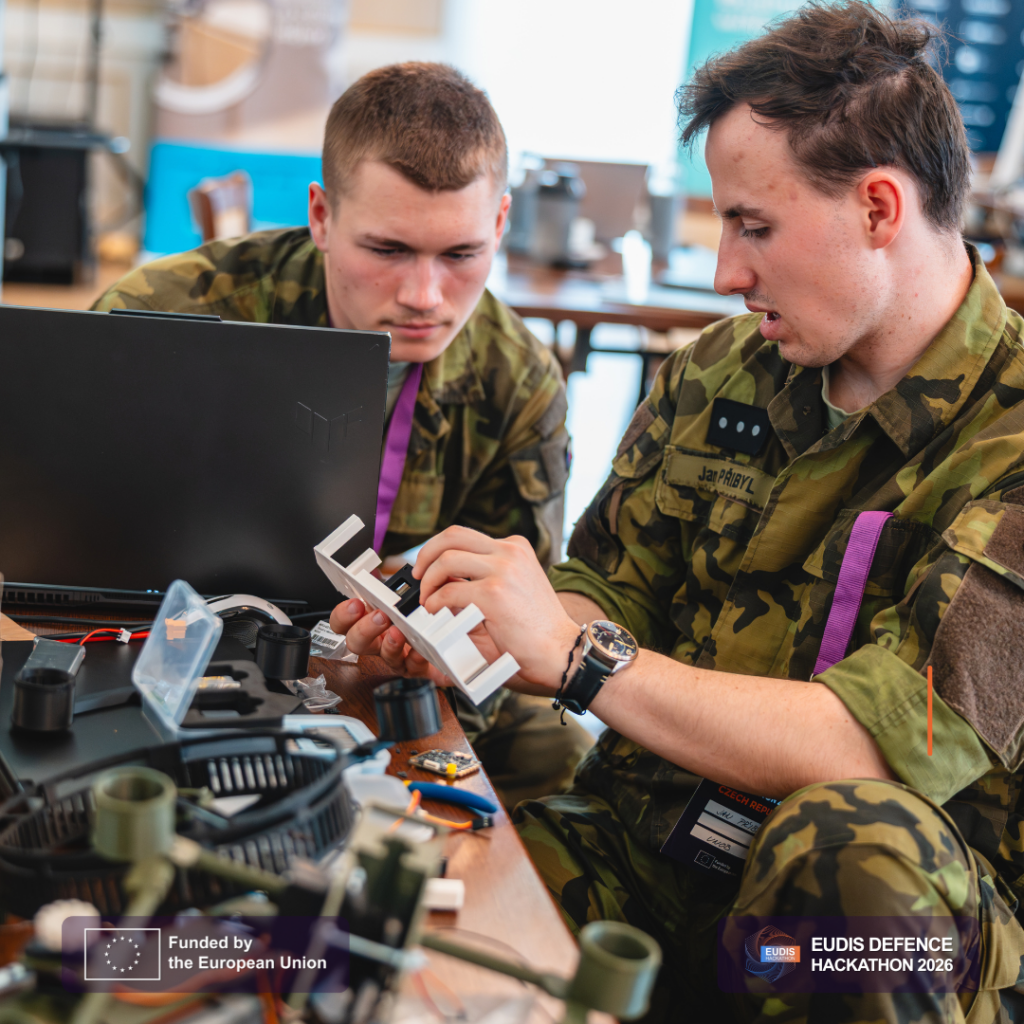
Teams worked in real testing conditions, including military bases, aeronautical research centres and former airbases, with access to live drone testing zones, large-scale flight areas and advanced prototyping facilities.
In Spain, the hackathon took place within a Special Operations Command base, while in the Netherlands participants tested solutions in live drone scenarios. In the Czech Republic and Norway, teams benefited from dedicated flight zones, and in France and Romania from direct access to defence innovation agencies and advanced laboratories.
This hands-on approach allowed teams to test and validate their technologies in environments closely aligned with real operational use cases.
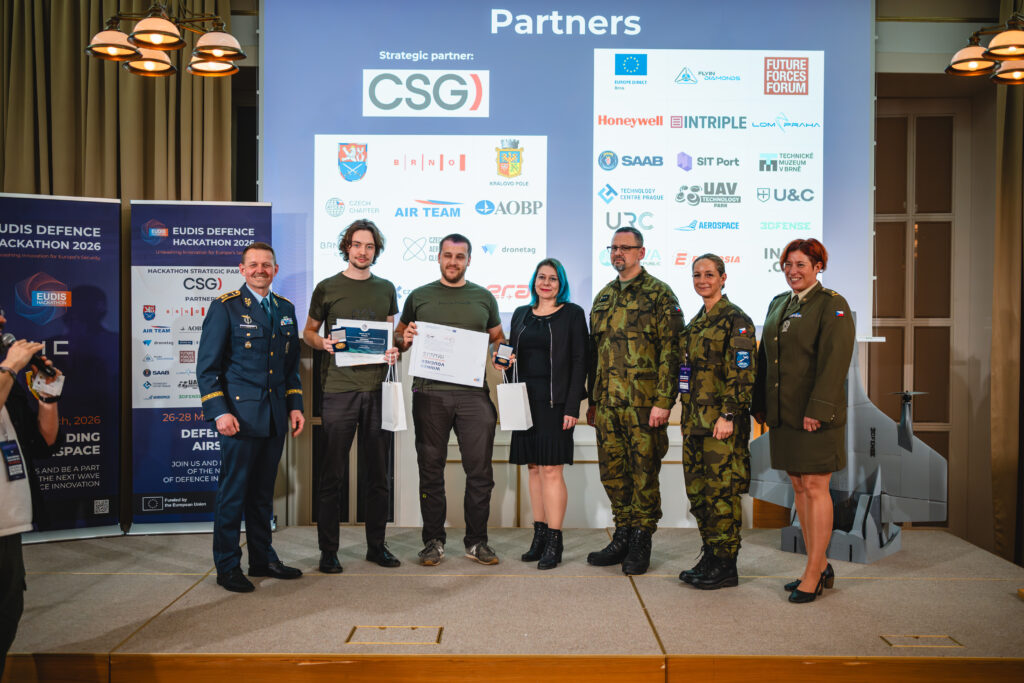
At the end of the hackathon, eight winning teams were selected, one per country:
- Czech Republic – MALNUS
- France – RUBICON
- Netherlands – ARQUS
- Norway – TIEPOINT
- Poland – RATTLESNAKE
- Portugal – RfSentinel
- Romania – SKY HUNTER
- Spain – ADAS.3
You can explore the winning teams and discover their solutions in more detail here:
https://eudis-hackathon.eu/winners/
But for these teams, the hackathon is just the beginning.
All winners will now enter the EUDIS Mentoring Programme, a two-month phase designed to help them further develop their technologies and connect with key actors in the European defence ecosystem. The team will also participate in dedicated EUDIS defence innovation bootcamp.
This journey will culminate in a European-level pitching session, followed by opportunities for three best teams to take part in EU-level defence events.
The Spring 2026 edition once again highlights the role of EUDIS as more than a hackathon. It is a gateway into the European defence innovation ecosystem, connecting startups and innovators with the right stakeholders, environments and opportunities to take their solutions further.
Preparations are already underway for the next EUDIS Defence Hackathon, which will take place in autumn 2026. A new call for local organisers and participants will be announced soon.
Stay tuned on the website for updates on upcoming opportunities and future editions.